Filipino Martial ARTS ARCHIVE
Remembering the individuals, systems, and traditions that helped preserve
and transmit the living heritage of Filipino martial arts across generations.
Beyond Technique:
Understanding the Principles of Eskrima Disarms
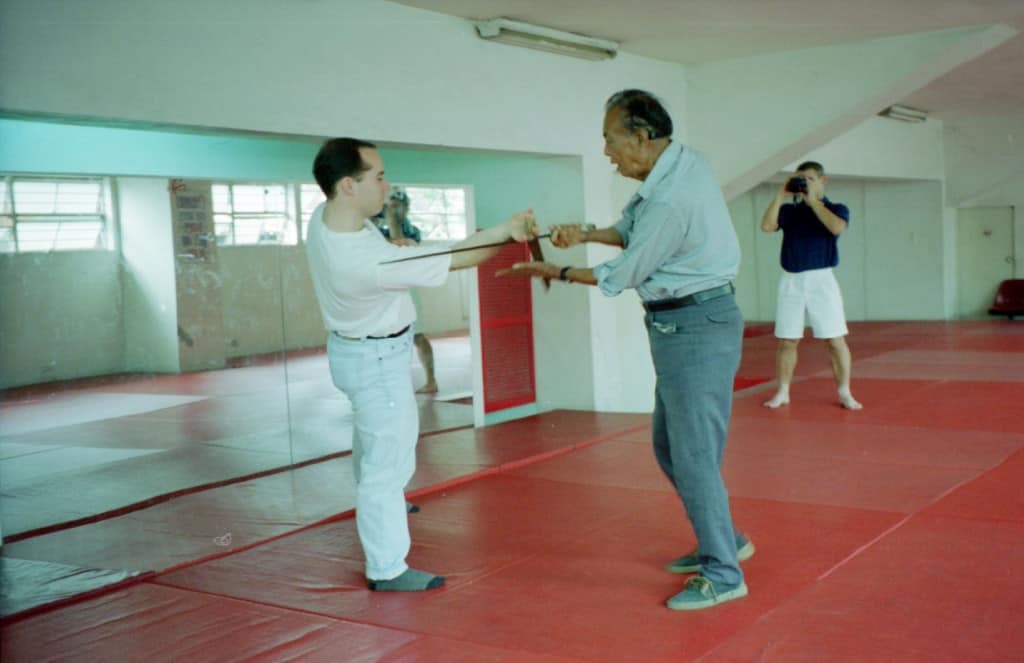
Disarming techniques are among the most misunderstood skills in Filipino martial arts. While often demonstrated as fast and visually impressive techniques, effective disarming depends on far more than memorized movement. Successful disarms rely upon timing, range, positional control, structure, weapon awareness, and the ability to adapt under pressure.
In many systems of Eskrima, Kali, and Arnis, practitioners spend years practicing disarms through repetition and cooperative drilling, yet never fully examine the principles that make those techniques functional against a resisting opponent. Techniques are not the essence of martial skill—they are expressions of deeper principles. When those principles are understood, movement becomes adaptable and effective under changing conditions.
“Techniques are merely examples of martial principles.” —Mark V. Wiley
Below are nine foundational principles that support safe and effective disarming methods in Eskrima.
1. Know Your Weapon Characteristics
Different weapons require different tactical responses. A knife disarm may resemble a stick disarm externally, but blade orientation, edge awareness, trajectory, and body positioning fundamentally change the dynamics of the encounter. Effective disarming therefore requires understanding not only the movement itself, but also the characteristics of the weapon involved and how they affect timing, angle, structure, and positional safety.
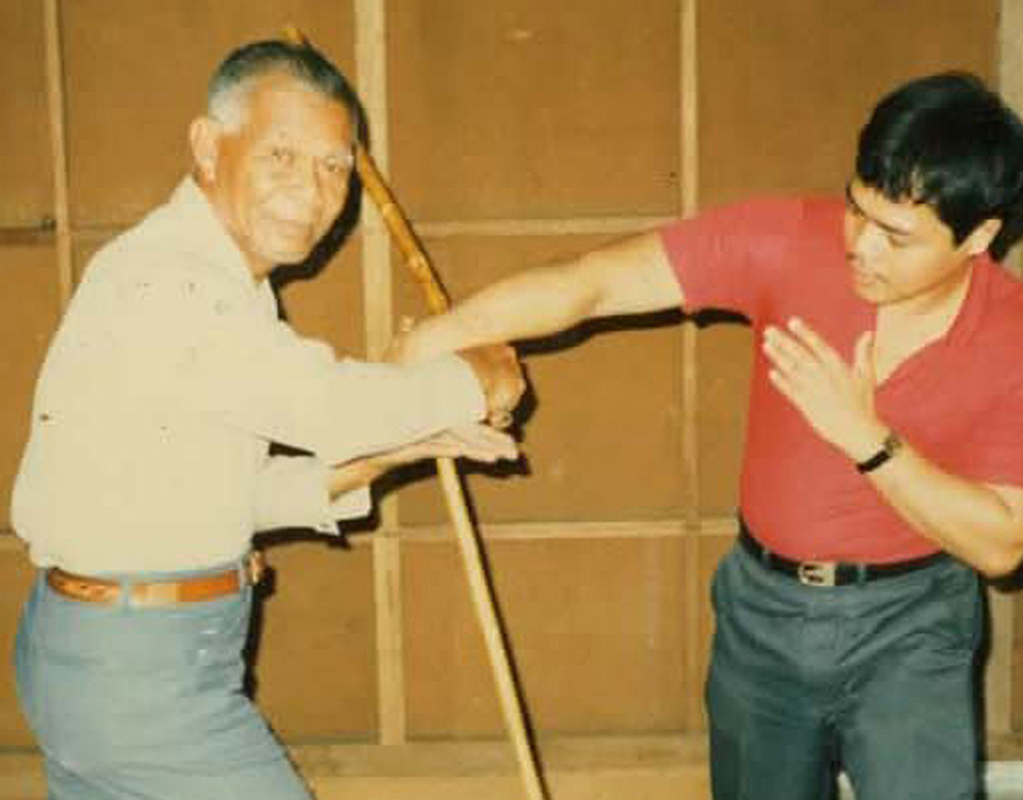
2. Neutralize the AttackA disarm should not begin until the incoming attack has first been controlled, redirected, or structurally compromised. Attempting to strip a weapon from a fully committed and resisting opponent without first neutralizing the attack often leads practitioners to force techniques through strength rather than position, timing, and structural advantage. |
 |
3. Control the Opponent
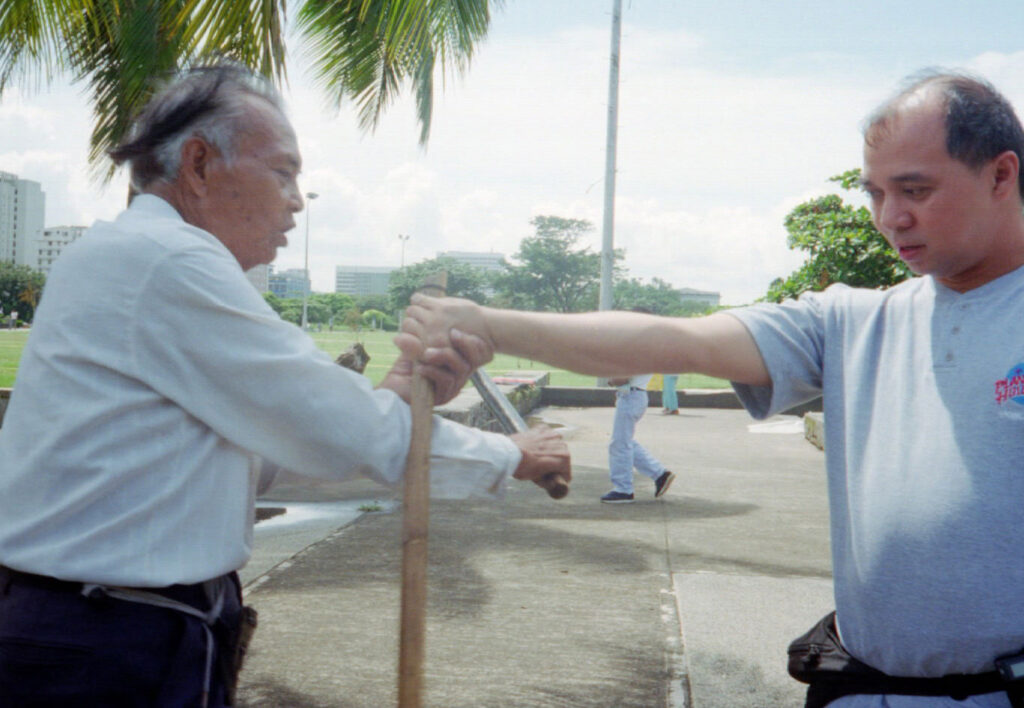
Effective disarming requires control of both the attacking limb and the opponent’s structure. Without disrupting balance, limiting mobility, or controlling the arm itself, the opponent remains free to counter, retract, or reverse the technique. True control involves leverage, positioning, joint sequencing, and structural disruption—not merely grabbing the wrist.
4. Maintain Your Own Structure
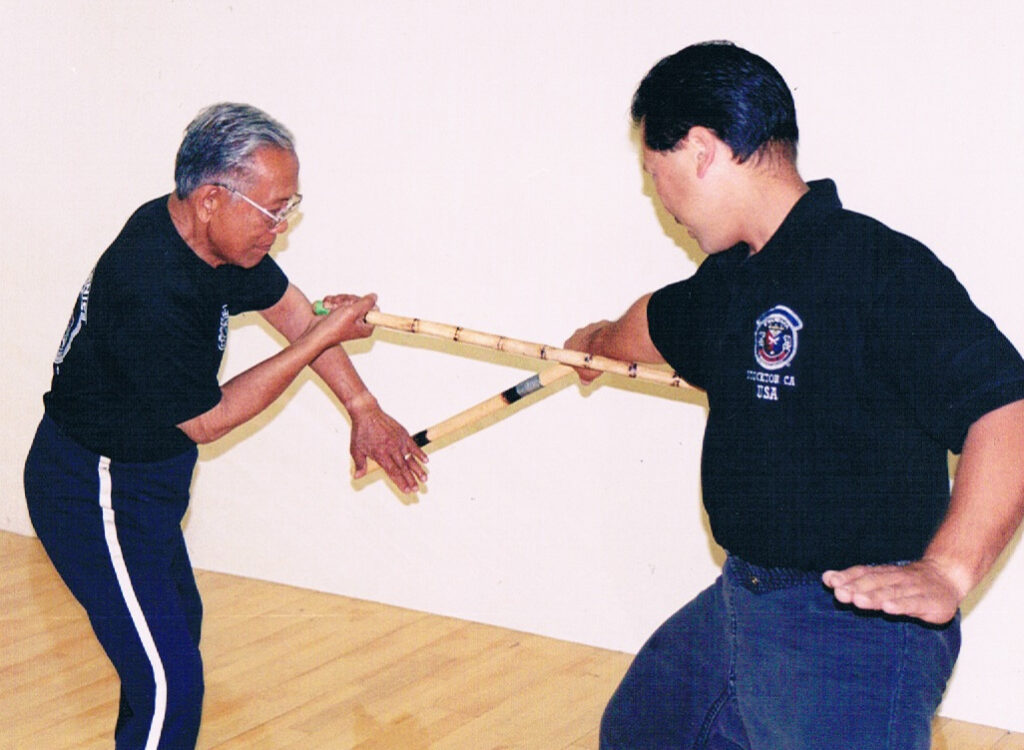
Structure refers to posture, alignment, balance, and positional integrity during movement. If your structure collapses during a disarm attempt, the technique becomes vulnerable to reversal or counterattack. Safe disarming depends not only upon breaking the opponent’s structure, but maintaining your own throughout the exchange.
 |
5. Know Where You Are at All TimesDisarming techniques are inseparable from range and positional relationship. Every disarm belongs to a specific range, and applying the wrong technique at the wrong distance creates openings that compromise both safety and effectiveness. Understanding range is therefore not merely technical—it is tactical and defensive. |
6. Don’t Hesitate or Struggle
One of the greatest causes of failure in disarming is hesitation. Safe disarms emerge naturally from proper timing, structure, and control rather than excessive force or muscular struggle. When position, range, and timing align correctly, the technique should occur decisively and efficiently.
7. Know When to Let Go
Not every disarm opportunity should be pursued to completion. If position collapses, control is lost, or the opponent counters effectively, the practitioner must release the attempt immediately and continue flowing into other responses. Survival—not completion of the disarm—is the true objective.
8. Less Is More
The most effective disarms are often the simplest. Excessive movement creates unnecessary openings, slows execution, and increases the likelihood of counterattack. Short, tight, structurally efficient movements allow the practitioner to maintain control while minimizing exposure under pressure.
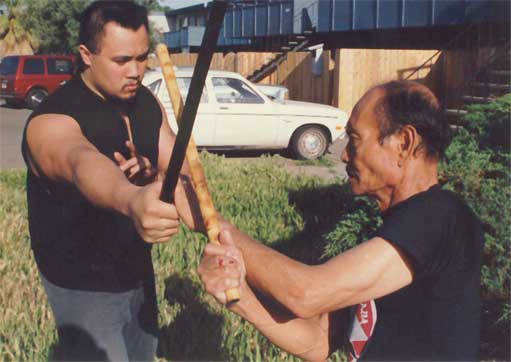 |
9. Don’t Strike YourselfWeapon awareness must remain constant throughout the exchange. During dynamic disarming movements, particularly ejection disarms, it is easy to lose awareness of the weapon’s trajectory and accidentally injure oneself in the process. Proper control of angle, structure, and positioning helps minimize this danger. |
Functional Training
One of the greatest weaknesses in modern disarm training is overreliance on cooperative drilling. Many practitioners practice against static attacks delivered at unrealistic range with little resistance, no follow-through, and exaggerated compliance.
| “There should be a progression in place for students to advance their skill on purpose and not just hope for the best when the time comes to use it.” —Mark V. Wiley | 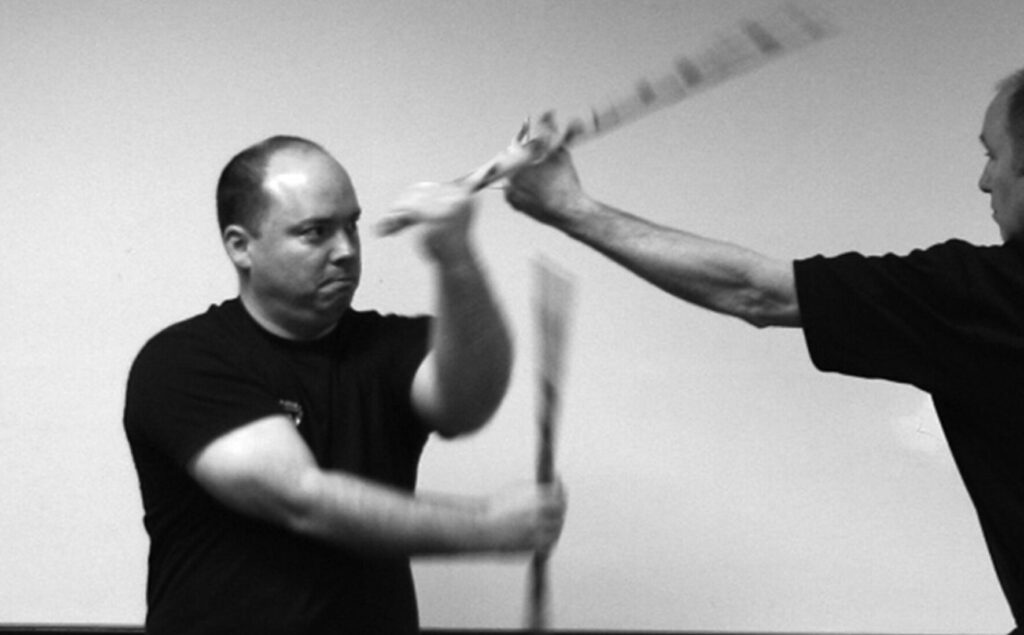 |
Ultimately, the true value of Filipino martial arts lies not in flashy techniques, but in understanding the principles that allow movement to remain functional under changing conditions. Techniques may vary from style to style, but principles such as structure, timing, range, control, and adaptability remain universal.
Related Book
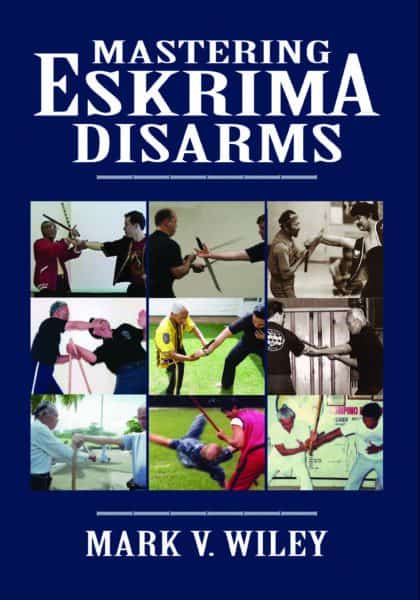 |
Drawing on decades of training and field research in the Philippines and the United States, Mastering Eskrima Disarms presents one of the most comprehensive explorations ever published on Filipino martial arts disarming methods.
This landmark volume contains: 135 disarming techniques, 33 Filipino martial arts systems, 70 masters and grandmasters, 935 instructional photographs, detailed analysis of structure, range, positional gates, grip releases, and tactical principles Featured systems include Kalis Ilustrisimo, Serrada Escrima, Moidern Arnis, Balintawak, Doce Pares, Dekiti Tirsia, San Miguel Eskrima, Integrated Eskrima, Inosanto Kali, and many more. Explore the principles, structures, and tactical methods behind Filipino martial arts disarming systems. |
About The Author
 |
The leading disciple of the late Sifu Alex Co, Mark V. Wiley is a martial arts researcher, publisher, filmmaker, and field documentarian whose work spans more than four decades of training, travel, and cultural preservation across the martial arts and healing traditions of Asia and the West.
Through Tambuli Media, Wiley continues to build a publishing and media platform focused on martial arts culture, oral transmission, historical preservation, and the documentation of embodied knowledge across generations. |
About Tambuli Media
Tambuli Media preserves and presents rare writings, field research, interviews, books, and archival materials from martial arts, healing traditions, philosophy, and embodied culture.