
What if much of our suffering is not caused by what happens to us, but by how we interpret it?
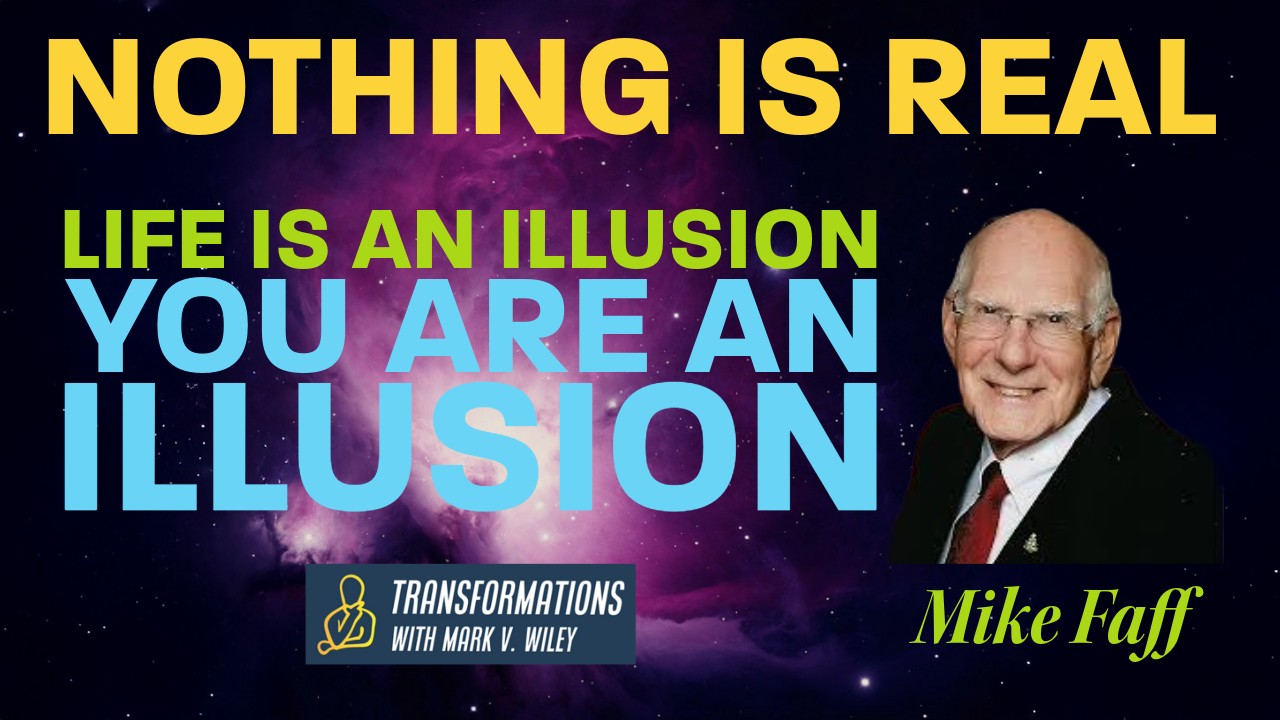
In this episode of the podcast, I sit down with Mike Milo Faff, a licensed therapist and creator of Living in the Illusion, to explore the subtle space where psychology meets spiritual inquiry. Mike is not a guru, nor does he present himself as a spiritual authority. His work is grounded in clinical experience, informed by ego psychology and influenced by A Course in Miracles. What makes this conversation compelling is not certainty, but clarity — a willingness to examine the mind without defensiveness or dogma.
The idea that “life is an illusion” can easily sound dismissive or abstract. But as Mike explains, illusion does not mean life is fake or meaningless. It means that much of what we react to — our fear, resentment, guilt, and shame — arises from perception, not objective reality. The ego, in this framework, is not an enemy to be destroyed, but a psychological structure designed to protect identity. Problems arise when we mistake that structure for who we truly are.
Throughout the conversation, we return again and again to a simple but challenging idea: healing begins with responsibility. Not blame, and not self-judgment — but ownership of perception. Mike speaks candidly about projection, the way unexamined inner conflict is often placed onto others, relationships, institutions, or the world at large. In doing so, we unknowingly recreate the very suffering we’re trying to escape.
One of the most grounded aspects of this discussion is its refusal to bypass pain. Spiritual language can sometimes become a way of avoiding grief, anger, or trauma — a kind of psychological escape dressed up as awakening. Mike is clear that genuine healing does not deny suffering or rush past it. Therapy, at its best, provides a container where truth can be faced slowly and honestly. Spiritual insight, when integrated properly, does not override that process — it deepens it.
We also talk about forgiveness, not as a moral demand, but as a perceptual shift. Forgiveness, in this sense, is not about excusing behavior or reconciling prematurely. It is about releasing the internal narrative that keeps wounds alive. This perspective challenges conventional ideas of justice and victimhood, but it also offers a quiet form of freedom — one that does not depend on anyone else changing.
Another thread woven through the conversation is why many people are drawn to spiritual ideas while simultaneously resisting religious or metaphysical language. Mike suggests that what most people are actually seeking is relief from inner conflict, not belief systems. When spirituality becomes abstract, hierarchical, or performative, it loses contact with lived experience. When it remains grounded in awareness, humility, and responsibility, it becomes practical.
This episode is especially relevant for anyone who has felt caught between worlds — skeptical of spiritual clichés, yet dissatisfied with purely material explanations of the mind. It speaks to those engaged in therapy, self-inquiry, or recovery, and to anyone quietly questioning the stories they tell themselves about who they are and why they suffer.
Rather than offering answers, this conversation invites honest observation. What are we protecting? What are we defending? And what might become possible if we questioned the lens through which we see the world?
▶️ Watch the full podcast conversation with Mike Milo Faff below, and explore what it might mean to live with less illusion — and more clarity.